MS Quantum Computing Program

Active Learning
The MS Quantum Computing blends instruction, hands-on quantum computing lab skill development, and research involvement.
Flexible Academic Plans
The MS Quantum Computing is designed so students of many STEM backgrounds can be successful and graduate in just one calendar year.
STEM-Designated Program
Gain a solid foundation in quantum information and computing in this distinctive program.Curriculum
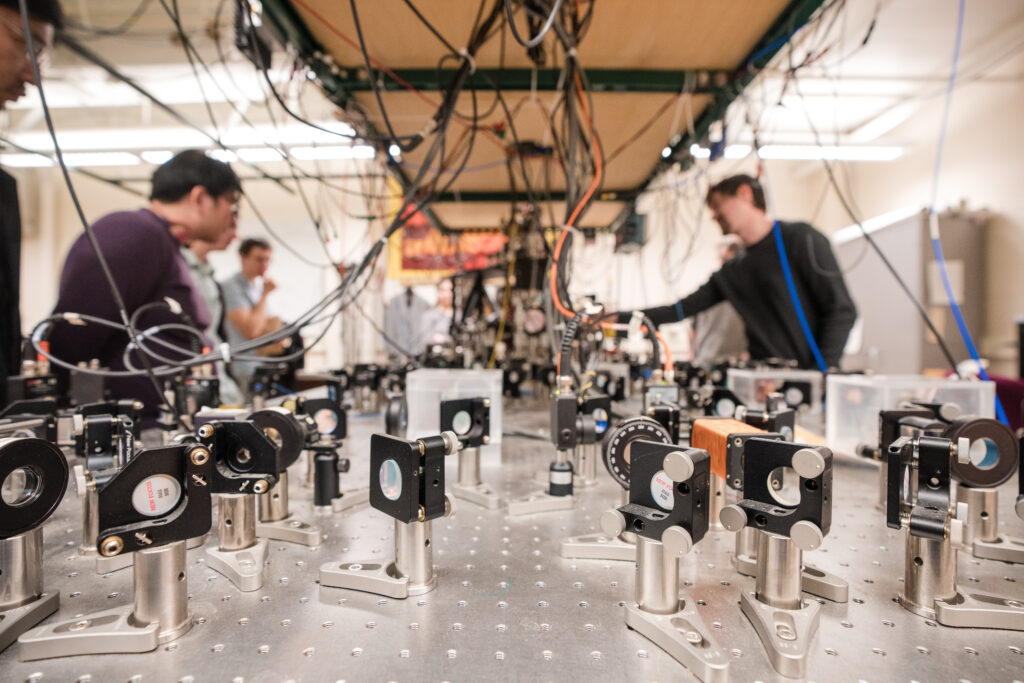
Graduates will have the tools to succeed as researchers or program managers in a quantum computing or technologies enterprise. They may also use the program as a springboard to PhD programs. The curriculum provides the opportunity to develop skills that are hardware-specific or software/computation-specific. It includes:
- Quantum theory and study of various hardware platforms
- Quantum gates, qubit tune-up, measurements, algorithms, quantum error correction, and decoherence
- Quantum communication theory and secure transmission of information
- Supporting areas of statistical mechanics, solid-state physics, and atomic physics
The current MS Quantum Computing handbook contains detailed curriculum information that is also adopted in the MS Quantum Computing program.
Admissions & Program Overview
- Three letters of recommendation
- Official transcripts
- Resume/CV
- Statement of Purpose: Address relevant experiences and future research/industry interests and goals. Communicate motivations for pursuing the MS Quantum Computing, and convey how interests/experiences align with the strengths of the UW– Madison program
Apply Today!
Credits: 30 credits required. Minimum of 15 credits (50%) must be graduate-level. A minimum of 16 graduate credits must be earned in residence at UW–Madison.
Tuition: $1,700/credit, $51,000.00 total. Segregated fees and living costs are in addition to the cost of tuition.
Duration: It is typically completed within five Terms but can be completed in one calendar year (three Terms) at an accelerated pace.
Courses: All core and core elective courses are offered by the Physics Department. All students must complete Physics 701, 707, 709, 763 and 779. Students can also choose courses in other departments (up to nine credits). List of Physics Courses Grades: Students must maintain an overall GPA of 3.0 or higher. Advising: Students work with MS Quantum Computing faculty to develop a plan of study.Funding: Students may accept teaching, research, or project assistantships, but may not accept tuition remission that may be offered with those positions. Contact the Office of Student Financial Aid to discuss federal loan programs and other lending opportunities.
Why Study Quantum Computing at UW–Madison?
The QC global market is forecasted to reach 1.5 billion USD in 2026. Growth is expected in both hardware, software and end-user access.
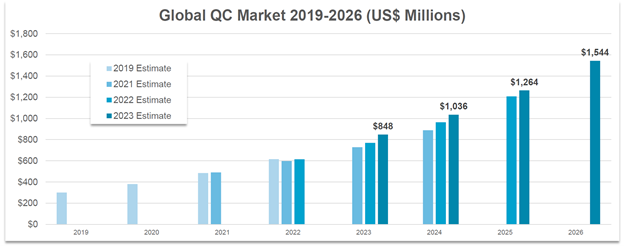 (https://quantumconsortium.org/4th-annual-qc-global-market-forecast/, Hyperion Research)
Is the MS Quantum Computing right for you? To help prospective students answer this question, we asked three graduates, Why MS Quantum Computing?
Connect with Us!
-
- Watch our program overview webinar
- Q&A with our Graduate Advisor: Jan 15, 2026 @ 9:30 – 10:30 AM (Central Time)
Current MS Quantum Computing Students
Useful Links
Upcoming MS Quantum Computing Events
Invalid state: could not determine which events template to apply.
FAQs
The new program offers much more specialized training in quantum computing hardware vs. software/computation. It is a flexible program, that can be completed in one calendar year (3 terms) or be extended to 5 terms. It offers a unique mix of classroom, laboratory instruction and research opportunities.
The level of degree received by the MSQC graduates is at the same level as that of the M.S. degree that students in the traditional M.S. program receive.
Yes. International applications are welcomed. If you accept our offer of admission, the Graduate School will send an I-20 form that you can use to apply for a visa to come to the UW–Madison campus to study.
Students enrolled in the MSQC program may accept research assistantships, teaching assistantships, project assistantships or other University appointments that grant waivers of tuition and/or academic fees anywhere on campus–they may accept the salary and any benefits offered through the appointment EXCEPT tuition waivers or tuition remission.
Students may accept corporate tuition support, waiver of tuition due to veteran status, or other private grants and scholarships that cover tuition or student fees.
Yes. However, you must apply to each one individually. Please note the Physics Ph.D. admissions deadline is December 15th so your application must be received by that time. On the Graduate School application, you will be allowed to apply for up to three programs with one application. If you are admitted into multiple programs, you must decide which one to attend before enrollment begins.
The MSQC program requires the completion of 30 credits, of which at least 15 must be at the graduate level. Four courses in quantum computing: Physics 701, 707, 709, 763 and 779 are required. An overall GPA of 3.0 must be maintained.
The MSQC program is typically completed in 4-5 Terms. However, the program can be completed in one calendar year (3 Terms) in an accelerated pace.
The application requirements are the same as the requirements for applicants to the regular M.S./Ph.D. program, except the GRE Subject test is not required. Applicants must:
- satisfy the Graduate School requirements with respect to undergraduate grade-point average, bachelor’s degree, English proficiency, and international financial information
- submit three letters of recommendation, official transcripts, a resume/CV, and a personal statement.