NOvA study sets tighter limit on sterile neutrinos
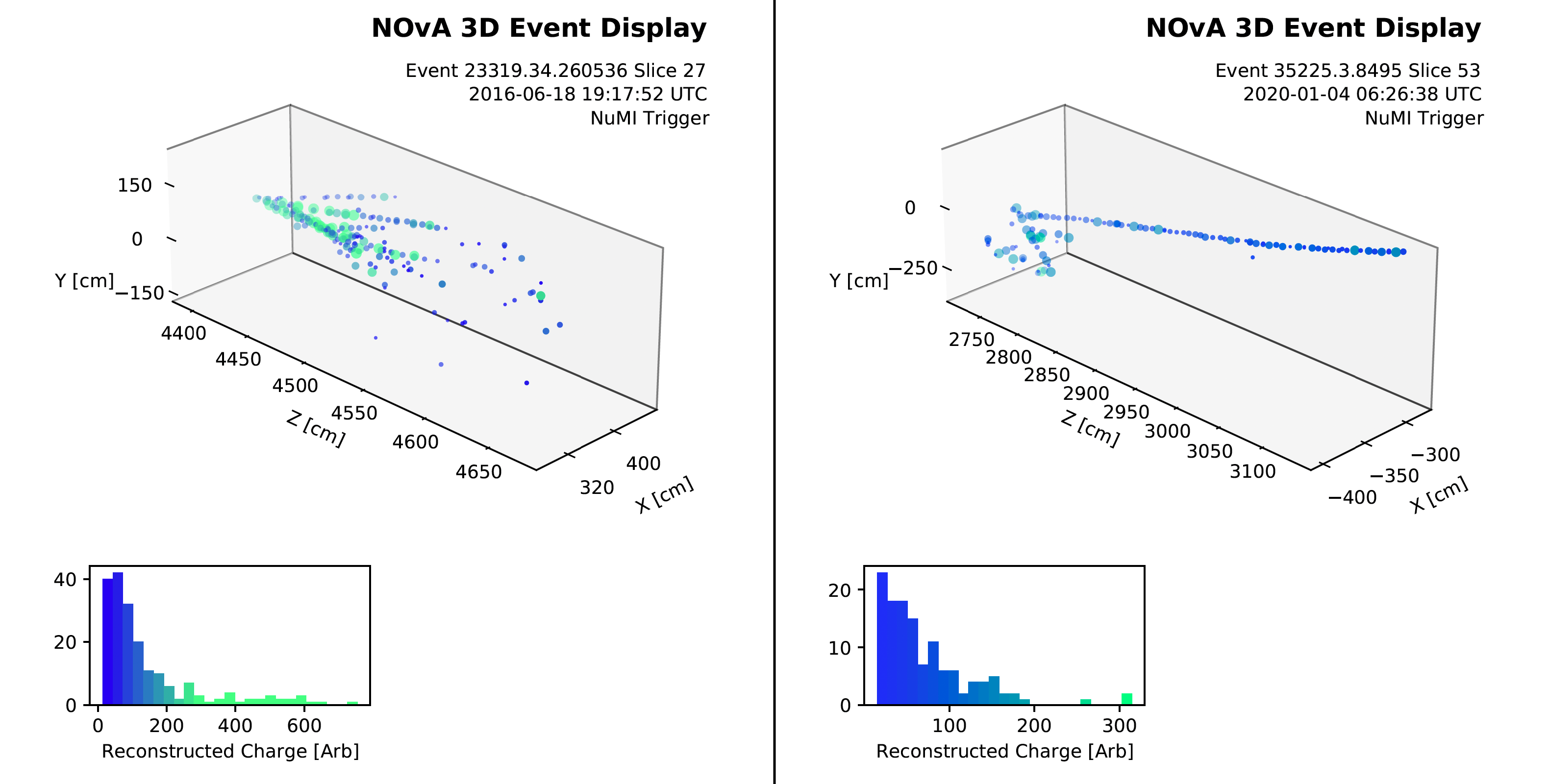
Depictions of particle traces at the far detector. In both images, the beam enters from the left and moves through the detector. When a neutrino interacts in the detector, it can produce a number of charged particles, which produce light as they travel through the detector. The light is recorded, and shown here as points. Based on the light pattern, the researchers use a neural network to classify an event as a neutral current interaction (left panel) with a characteristic shower of particles or as a charged current interaction (right), with a characteristic long track. | Provided by Adam LIster

Adam Lister
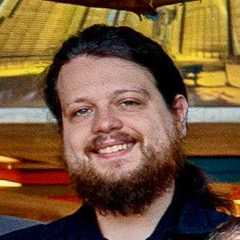
Harry Hausner

Brian Rebel
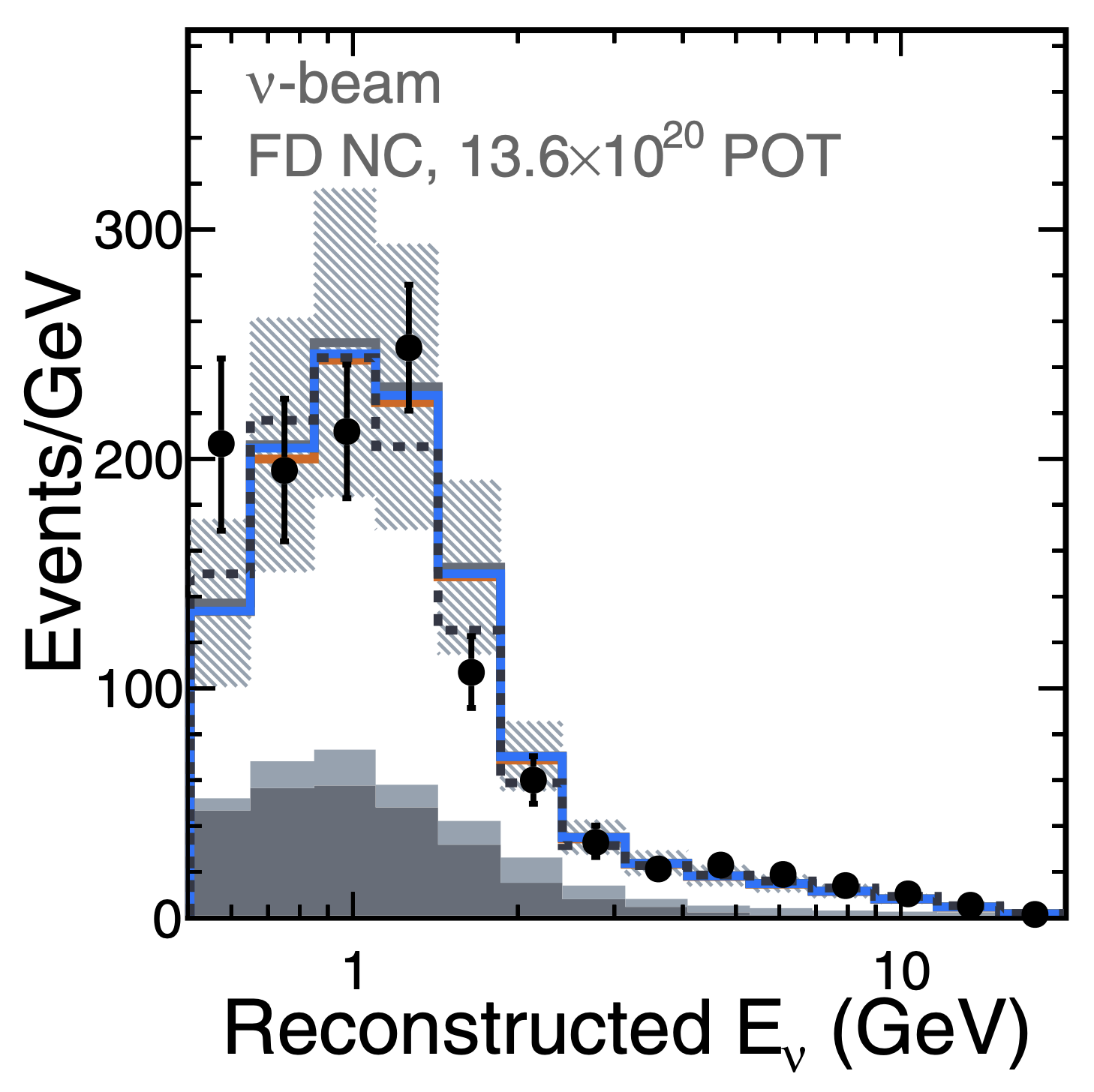
The number of times a neutrino of a given energy range (x axis) was counted (y axis) at the far detector, shown as data points. The shaded grey area shows where the data should fit if the three-flavor (i.e. no sterile neutrinos) model is true, and overall there are no deviations from this model. The dark shaded area at the bottom shows counts due to cosmic rays. | From this study
This study was published by the NOvA collaboration, centered at Fermilab, and largely led by scientists at UW–Madison (Lister, Rebel, and former graduate student Harry Hausner) and the University of Cincinnati (postdoctoral researcher V. Hewes and physics professor Adam Aurisano). This work was supported by the U.S. Department of Energy; the U.S. National Science Foundation; the Department of Science and Technology, India; the European Research Council; the MSMT CR, GA UK, Czech Republic; the RAS, MSHE, and RFBR, Russia; CNPq and FAPEG, Brazil; UKRI, STFC and the Royal Society, United Kingdom; and the state and University of Minnesota.